
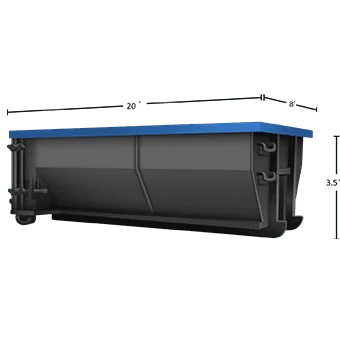
Allow for more than the container footprint
A roll-off container is delivered and collected by a vehicle, so its resting dimensions are only one part of the space requirement. Describe the entrance, approach, overhead conditions and proposed standing area to the rental contact.
Have the supplier assess the actual arrangement. A space that fits an empty container on a sketch may not leave the working room required to place or retrieve it safely.
Keep loading and pickup access available
Explain how people or equipment will load the container. Ask about any door or loading arrangement on the actual model, and keep the relevant working space clear. Do not place the container where using it requires crossing a busy restroom approach or guest entrance.
The collection route must still be available after the job changes. Parked vehicles, delivered materials or temporary barriers should not obstruct the access needed for retrieval.
Match the load to the agreed container
Describe the debris type and quantity, and review the accepted materials and load limits. The provider should identify the actual offered container and the conditions under which it can be collected.
Ask before adding uncertain items or dense material beyond the agreed scope. If the project produces more debris than expected, discuss an exchange or another appropriate arrangement rather than overloading the existing container.
Confirm the complete roll-off hire
Provide the Keene address, intended dates, contents and access information. Ask about delivery, pickup, disposal terms, rental period and changes. Where a property or public location has placement requirements, resolve the actual position with the responsible party before confirming.
Select Dumpster Rental in the quote form or use the Dumpster call button. Equipment and date availability are confirmed for the specific request.